


On April 2nd, Tesla announced its global delivery volume for the first quarter: 386,810 vehicles, a result that surprised many. Analysts across the board expressed disappointment, with long-time Tesla bull Dan Ives of Wedbush Securities even calling it "a complete disaster."

In fact, days before Tesla released its delivery numbers, industry analysts had already predicted a sluggish first-quarter performance. According to an average forecast by 18 analysts surveyed by Visible Alpha, Wall Street expected Tesla to deliver 454,200 vehicles in the first quarter, a decrease of over 5% from the previous quarter but still higher than the 422,875 vehicles delivered in the same period last year.
However, Tesla's actual delivery results fell far below even the most pessimistic analyst expectations, dropping over 20% from the previous quarter and experiencing an 8.5% year-over-year decline. The last time Tesla saw a year-over-year decline in deliveries was in the second quarter of 2020, during the COVID-19 pandemic-induced production halt.
Tesla attributed this delivery downturn to three main factors: upgrades to the Fremont factory for the refreshed Model 3, a brief halt in production due to a fire near the Berlin factory, and disruptions in parts supply and vehicle transport due to the Red Sea conflict.
However, one reason Tesla didn't mention could be demand-related issues. In the first quarter of this year, Tesla produced 433,371 vehicles, a mere 1.7% year-over-year decline and a 12.5% decrease from the previous quarter, much smaller than the drop in deliveries. Analysts noted that Tesla's production exceeded deliveries by 46,000 vehicles, indicating weakening demand. In fact, data from Gaishi Auto found that over the past two years, except for the third quarter of 2023, Tesla's production has consistently exceeded deliveries by over 10,000 vehicles, with the 46,000 vehicle difference in the first quarter of this year being the largest in the past five years.
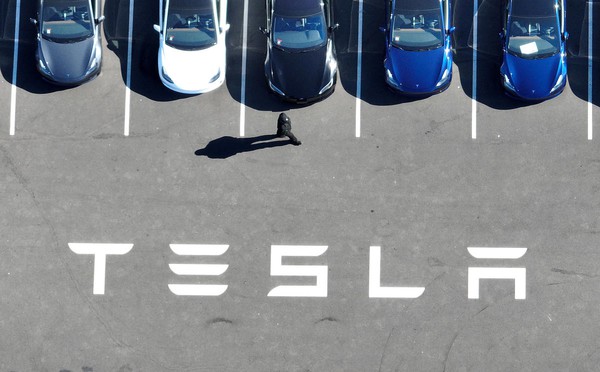
In China, which accounts for 33% of Tesla's sales, the company faces fierce competition from domestic electric vehicle manufacturers like BYD and newcomers like Xiaomi. Despite a 17% increase in overall passenger car sales and a 37.5% growth in new energy vehicle sales in China in the first two months of this year, Tesla's shipments from its Shanghai factory fell by 6% compared to the same period last year. Reports have indicated that due to sluggish sales growth, Tesla reduced production of Model 3 and Model Y at its Shanghai factory, cutting workers' work hours from 6.5 days per week to 5 days, all signs of demand failing to keep up with capacity.
In another key market, the United States, surveys and experts suggest that Tesla CEO Elon Musk's personal image, his right-leaning political inclinations, and his polarizing public statements have deterred some potential customers. According to a survey by market intelligence company Caliber, consumer interest in Tesla, measured by the "consideration score," dropped to 31% in February this year, less than half of the 70% peak when Caliber began tracking consumer interest in the brand in November 2021; another survey by consumer analysis company CivicScience showed that 42% of respondents had a negative view of Musk in February this year, higher than the 34% in April 2022. Tesla itself has faced a series of image problems, including lawsuits and investigations related to the Autopilot driver assistance system and FSD, as well as allegations of manipulating estimated vehicle range.

Ultimately, Tesla's products are no longer as competitive as they once were. The Model 3 took 7 years to refresh, and even after the refresh, its price has yet to match or go lower than the previous generation, while domestic carmakers have significantly lowered prices, even offering many alternatives to the Model 3; although the Model Y is still a key model, plans for a refreshed version have yet to be announced; the new Cybertruck, which started sales in December last year, has received mixed reviews from consumers and, like the Model S and Model X, is not a high-volume model, with only 17,000 units delivered in the first quarter combined; additionally, Tesla's much-touted FSD autonomous driving system has yet to see significant breakthroughs.
Karl Brauer, Executive Analyst at ISeeCars.com, also pointed out, "Musk has never faced a demand problem before, but over the past year and a half, there have been increasingly signs that the number of cars he produces exceeds market demand."
Given Tesla's first-quarter performance and industry concerns about demand, Tesla's stock price fell by 5% on April 2nd, to $166.63 per share, wiping out about $30 billion in market value. Tesla's stock has fallen by 29% in the first quarter of this year, the largest drop since the end of 2022 and the third-largest quarterly drop since the company's IPO in 2010. Year-to-date, the company's stock has fallen by about 33%.
Despite the disappointing first-quarter sales, Tesla has a small consolation: it reclaimed the title of the world's largest pure electric vehicle seller from BYD.
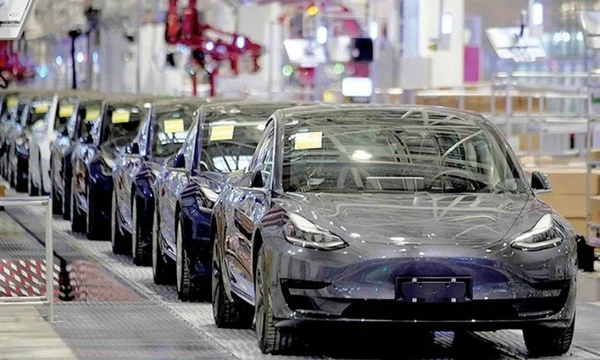
In the fourth quarter of last year, buoyed by a wider range of affordable electric models, BYD sold 526,409 pure electric vehicles, surpassing Tesla (484,507 units) for the first time in history to become the new leader in the global pure electric vehicle market.
However, in the just-passed first quarter, BYD's pure electric vehicle sales fell by 43% compared to the fourth quarter of last year, relinquishing the title of the world's largest pure electric vehicle manufacturer it had just won to Tesla. Data shows that BYD sold 626,263 new energy vehicles (including plug-in hybrids) globally in Q1, with pure electric vehicle deliveries totaling 300,114 units, less than Tesla's 386,810 units.
Tesla's recapture of the top spot in global pure electric vehicle sales, despite its worst quarterly sales in nearly two years, indicates that its influence in the electric vehicle sector is not easily challenged, especially as both BYD and Tesla expect slowing growth in China's electric vehicle sales this year. This also indicates that BYD's brief dominance was achieved after price cuts, and it may not be sustainable or long-lasting.
Gene Munster, Managing Partner at asset management firm Deepwater Asset Management, said that while Tesla's quarter was "disappointing," much of it can be blamed on high interest rates and a cooling enthusiasm in the electric vehicle market. He remains optimistic about Tesla's long-term prospects.

However, whether Tesla can continue to outsell BYD in pure electric vehicle sales for the rest of the year remains uncertain. The company must address demand issues and find ways to deal with growing inventory.
Analysts had previously forecasted that Tesla's deliveries in 2024 would exceed 2 million units, an 11% increase. But the latest quarterly sales data suggests Tesla would need to sell an average of 538,000 vehicles per quarter to achieve this goal, a figure even higher than Tesla's best quarterly sales of about 485,000 units.
"We believe this is a critical moment in Tesla's history, where Musk either takes action to turn around this quarter's disadvantageous situation, or he may face even more difficult times..." Dan Ives said.
Therefore, while it's premature to say Tesla has fallen from grace, the road ahead is indeed challenging.



