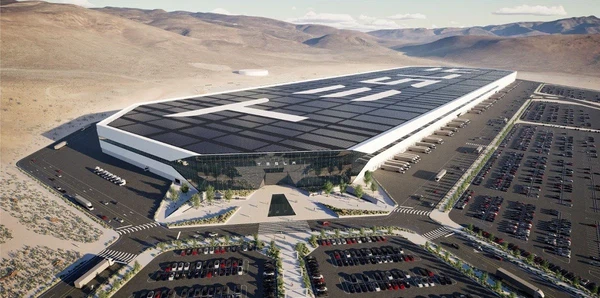
On March 25th, during the inaugural One Earth Summit held in Hong Kong, Zeng Yuqun, Chairman and CEO of Contemporary Amperex Technology Co. Ltd. (CATL), revealed in an interview with American media that CATL is collaborating with Tesla to develop fast-charging batteries for electric vehicles. The two companies are jointly researching new battery technologies, including innovative electrochemical structures. Additionally, CATL is providing equipment for Tesla's factory in Nevada, USA.
Influenced by this positive news, CATL's stock price surged in the morning session on March 26th, closing the day with a 3.79% increase at 191.8 yuan.
During the summit, Zeng Yuqun emphasized the importance of "open innovation" to drive global sustainable development.
He pointed out that the world is facing severe climate challenges, with issues such as uneven technological development and slow progress in energy transition in some regions becoming increasingly prominent. "There has never been a time when global consensus is more needed than today. We must truly achieve consensus and promote technological progress through open innovation to actively address the challenges of climate change."
Since its establishment, CATL has focused on three strategic development directions and built four innovation systems. Open innovation is the practical path of these four innovation systems.

Internally, CATL continues to increase research and development investment, exploring cutting-edge technologies and advanced solutions. In 2023, the total R&D investment amounted to 18.4 billion yuan, far exceeding the industry average.
Externally, CATL constantly innovates cooperation methods, sharing technological achievements globally to promote universal access to technology. For example, CATL adopts the LRS model with its American customers, which stands for License, Royalty, and Service, helping original equipment manufacturers (OEMs) and battery manufacturers quickly establish battery factories. Through technological openness, CATL aims to accelerate global energy transformation and address climate change.
In February 2023, Ford announced its collaboration with CATL to build a battery factory near Marshall, Michigan, USA. In this partnership, CATL will provide patent licenses, equipment support, production site management, and supply chain quality management assistance to Ford's battery factory in the USA. However, CATL will not have any ownership stake in Ford's battery factory; it will only receive technology service fees, following the LRS (License Royalty Service) model.

The project is planned to invest $3.5 billion, with capital expenditures borne by Ford. Initially planned capacity is 35 GWh, reduced to 20 GWh in the second half of 2023, with production scheduled to start before 2026.
The introduction of the LRS model was initially seen as a response to the US government's subsidies for domestic new energy industries.
In August 2022, the US Congress passed the "Inflation Reduction Act," which supports subsidies of $7,500 for each electric vehicle manufactured domestically in North America (including the US, Canada, and Mexico), with $3,750 allocated to battery manufacturers. The condition is that components accounting for over 50% of the battery cost must be produced or assembled in North America.
According to the "Sensitive Entity Guidelines," subsidies are unavailable if batteries are manufactured or organized by "foreign sensitive entities"; companies registered in China or with the Chinese government holding 25% or more shares are potentially considered "foreign sensitive entities."
While CATL may be classified as a "sensitive entity," the US government has not taken concrete action yet. However, considering this possibility, American automakers engaging with CATL, such as Ford, have opted for a more secure technology licensing approach to avoid future subsidy uncertainties.

During the interview, Zeng Yuqun mentioned that CATL plans to train engineers from Ford and invite them to CATL's headquarters in Ningde, Fujian Province, or its factories in Germany. He also stated that CATL is negotiating similar arrangements with 10 to 20 other automakers in the US and Europe.
Analysts point out that many American automakers are willing to cooperate with Chinese companies like CATL because they want to use cost-effective lithium iron phosphate (LFP) batteries.
Currently, among major battery companies globally, only Chinese companies can mass-produce LFP batteries. CATL is the world's largest manufacturer of LFP batteries. Companies like LG Energy Solution from South Korea are expected to start mass production of LFP batteries no earlier than 2026, while CATL upgraded LFP batteries in 2023, producing 4C fast-charging and M3P batteries with superior performance.

In August last year, CATL launched the "Xiaoxing" ultra-fast charging battery, capable of "charging for 10 minutes and driving 400 kilometers" with ultra-fast charging speed, and achieving a range of over 700 kilometers.
According to Wu Kai, Chief Scientist of CATL, to further expand the new energy vehicle market, the best way is to develop super-fast charging, reduce charging time, and effectively address users' anxiety about energy replenishment.
As one of the important ways of "open innovation," there may be more European and American automakers partnering with CATL in the future to start LRS cooperation, which will also bring more market share to CATL.
In January 2024, CATL achieved a installed capacity of 5.7 GWh, a year-on-year increase of 28.5%, with a market share of 25.8%, surpassing LG Energy Solution in the overseas market, marking the first time it has taken the lead in the overseas market.