


According to reports from Reuters and Bloomberg, on August 26, Canada announced that it will follow the United States and the European Union in imposing a 100% tariff on all electric vehicles imported from China. This includes electric and some hybrid passenger cars, trucks, buses, and vans, as well as vehicles produced by foreign automakers like Tesla in China.
The new tariff policy on Chinese-made electric vehicles will take effect on October 1. Notably, this 100% surcharge will be in addition to the existing 6.1% tariff.
Additionally, Canada announced a 25% tariff on steel and aluminum imports from China, which will take effect on October 15. The public will have an opportunity to comment before the final tariffs come into force.
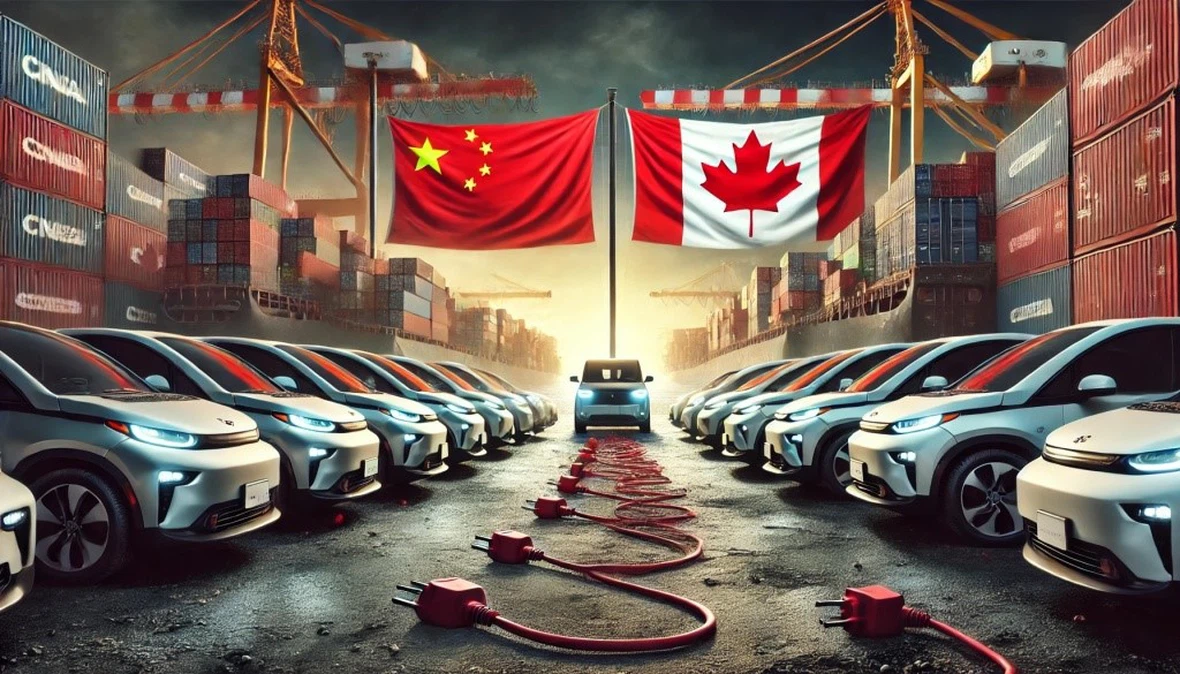
The Canadian government has also initiated a 30-day public consultation period on whether to impose tariffs on other Chinese-made products, including batteries and battery components, semiconductors, solar products, and critical minerals.
Canadian Prime Minister Justin Trudeau stated that Canada is taking action to respond to China's "state subsidy" policies. Speaking at a three-day cabinet meeting in Halifax, Nova Scotia, Trudeau said, "It is important that we align with other major economies around the world."
Trudeau also mentioned that Canada will continue to work with the United States and other allies and is considering further measures, such as imposing tariffs on Chinese chips and solar cells. However, he did not disclose specific details.
Currently, the United States remains Canada's largest trading partner, while China is its second-largest. Facing pressure from the domestic automotive industry, Canada has finally taken action against Chinese electric vehicles. Canada is trying to position itself as a key link in the global electric vehicle supply chain and has signed multi-billion-dollar agreements to attract top European automakers to participate in various aspects of the electric vehicle supply chain.
Flavio Volpe, president of the Automotive Parts Manufacturers' Association, wrote in an email, "We feel validated and encouraged. Now let's defend our market with Canada's best innovation and determination."
In response to Canada's actions, the Chinese Embassy in Canada called it "trade protectionism" and a "politically driven act," adding that Canada disregarded WTO rules. In a statement released on the evening of August 26, an embassy spokesperson said this move would harm normal economic and trade cooperation between China and Canada and hurt Canadian consumers and businesses.
The spokesperson stated, "Despite China's repeated opposition and solemn representations, the Canadian government has insisted on imposing tariffs on Chinese electric vehicles. China urges Canada to respect objective facts, abide by WTO rules, and immediately correct its wrongdoings. China will take all necessary measures to protect the legitimate rights and interests of Chinese companies."
The spokesperson also emphasized, "The rapid development of China's electric vehicle industry is due to continuous technological innovation, a well-established supply chain system, and sufficient market competition. It is not reliant on subsidies to gain a competitive edge. Canada's accusations of so-called 'overcapacity' in China are unfounded. The development of China's electric vehicle industry has made a positive contribution to addressing climate change and achieving a green energy transition globally."
Tesla began exporting its electric vehicles produced at its Shanghai factory to Canada last year. Influenced by Tesla, last year, Canada saw a 460% year-on-year surge in car imports from China to its largest port in Vancouver, reaching 44,356 vehicles.
Tesla has not disclosed the number of Chinese-made vehicles it exports to Canada. However, vehicle identification codes indicate that both the Tesla Model 3 compact sedan and the Model Y crossover are exported from Shanghai to Canada.
After the Canadian government's announcement, Tesla's stock price closed down by 3.2%.
Morningstar equity strategist Seth Goldstein said, "In response to the tariffs, I believe Tesla will adjust its logistics and may begin exporting cars from the U.S. to Canada." Goldstein commented on Tesla's stock drop, stating, "The market may be reacting to the tariffs and weighing the potential impact on profits. If Tesla has to export cars from its higher-cost U.S. production facilities to Canada, it could have a potential impact on its profits."
Tesla has yet to respond to a request for comment on the report.
Earlier this month, the European Union revised its tariff rate on Chinese-made Tesla vehicles, reducing it to 9%, lower than the tariffs of up to 36.3% imposed on other Chinese-made electric vehicles.
In May this year, U.S. President Joe Biden announced that tariffs on imported Chinese electric vehicles would be tripled to 100%, tariffs on semiconductors and solar cells would be doubled to 50%, and new tariffs of 25% would be imposed on strategic goods, including lithium-ion batteries and steel.
The implementation of U.S. tariffs has been delayed until September, and a slight reduction in planned tariffs is expected to be announced this week.



