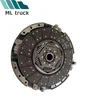
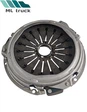
1. What Is a clutch kits ?
OEM truck clutch parts are a mechanical device that connects and disconnects the engine from the transmission, allowing the driver to control power transfer to the wheels. In trucks and cars, it enables smooth gear changes, prevents engine stalling, and provides precise torque control. Without a properly functioning clutch, vehicles would experience difficulty in starting, shifting, and maintaining acceleration.
2.Functions of Clutch Disc, Pressure Plate, and Release Bearing
Clutch Disc (Clutch Plate): The clutch disc is the friction component that sits between the engine flywheel and the pressure plate. It engages and disengages engine power to the transmission. High-quality discs ensure smooth torque transfer and long service life.
Pressure Plate (Clutch Cover): The pressure plate applies force to the clutch disc, pressing it against the flywheel to transmit engine power. When the clutch pedal is pressed, the pressure plate releases the disc, allowing gear shifts.
Release Bearing (Throwout Bearing): The release bearing reduces friction between the clutch pedal mechanism and the pressure plate. It allows smooth engagement and disengagement, preventing excessive wear on the clutch components.
Differences Between Single-Plate, Dual-Plate, Push-Type, and Pull-Type Clutches
Single-Plate Clutch: The most common design for trucks and cars, featuring one clutch disc. It is compact, cost-effective, and suitable for standard torque applications.
Dual-Plate Clutch: Uses two clutch discs for higher torque capacity and improved heat dissipation. Common in heavy-duty or high-performance trucks.
Push-Type Clutch: Engaged when the clutch pedal is pushed; the release mechanism pushes the pressure plate to disengage. Often used in older European truck designs.
Pull-Type Clutch: Engaged when the clutch pedal is pulled; the release mechanism pulls the pressure plate to disengage. Typically found in newer MAN and Mercedes truck models, offering lighter pedal effort and smoother operation.
4. Differences Between European Truck Clutches and Passenger Car Clutches
European truck clutches are specifically designed for high-torque, heavy-duty engines. Compared to passenger car clutches, they have:
Larger diameters (often 380mm–430mm)
Stronger pressure plates and friction materials
Multi-stage damping springs to reduce vibration
Enhanced heat resistance for long-haul or heavy-load operations
Passenger car clutches are smaller, lighter, and designed for lower torque, city driving, and frequent start-stop conditions. Truck clutches prioritize durability, torque capacity, and long service life.
5. Clutch Friction Material Types (Ceramic, Copper-Based, High-Carbon Fiber, etc.)
Ceramic Friction Materials: High heat resistance and long service life, ideal for heavy-duty trucks and high-torque applications. Can handle extreme load but may produce slightly more noise.
Copper-Based Friction Materials: Excellent heat dissipation, stable performance under heavy load, commonly used in European and Japanese truck clutches.
High-Carbon Fiber Materials: Lightweight, durable, and heat-resistant, providing smooth engagement and extended service life. Often used in premium aftermarket or racing applications.
Organic / Semi-Metallic Materials: Softer materials for smoother pedal feel, commonly used in standard trucks or passenger vehicles, but wear faster under heavy loads.