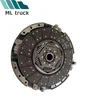
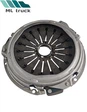
The clutch is an essential component in the vehicle's transmission system, responsible for separating or engaging the engine from the transmission. It facilitates the transfer or disconnection of power from the engine to the transmission. When driving in the rain, concerns about the clutch getting wet and its potential impact on the vehicle may arise. However, in reality, when the clutch gets wet, it has mechanisms to dry itself in specific ways.

Firstly, there is a small hole in the flywheel ring of the clutch. This hole allows water to drain out automatically. When water enters the clutch, it naturally flows out through this small hole, rapidly reducing the moisture inside the clutch.
As the clutch generates frictional heat during operation, coupled with the relatively high temperatures when the vehicle is in motion, water is more likely to evaporate and dry. In most cases, a day is sufficient for the water inside the clutch to evaporate and dry.
However, if water hasn't completely evaporated, leading to rust and adhesion issues inside the clutch, there are steps that can be taken to address the problem.
In such situations, the vehicle can be driven to an open area, put in gear while the engine is off. Then, press the clutch and ignite the engine. This action will create a force causing the vehicle to move forward.
Utilizing the momentary powerful torque difference, this process can help break apart the rusted and adhered sections inside the clutch. Subsequently, by pressing the clutch and driving in semi-linkage for a period, the clutch can return to normal functionality.
Therefore, when encountering puddles on rainy days, despite the possibility of the clutch getting wet, there is no need for excessive concern.