1:Did you know?
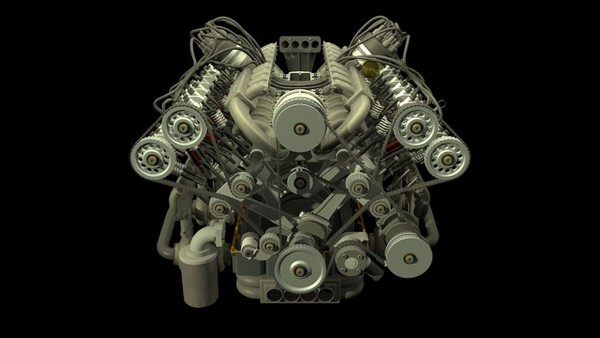
The W engine is an exclusive engine technology developed by Volkswagen in Germany. It is formed by arranging the cylinders of a V engine with a slight offset, creating a W-shaped configuration. In other words, the cylinder arrangement of a W engine consists of two small V shapes arranged in a V shape.
2:Principle
Many people assume that the cylinder arrangement of a W engine is shaped like a "W" just like the V engine's cylinders form a V shape. However, this is not entirely accurate. The W engine's cylinder arrangement is only approximately W-shaped; strictly speaking, it still belongs to the V engine family, at least as a variant of the V engine.
3:Advantages and disadvantages

Advantages:
Shorter engine and crankshaft, resulting in a compact structure.
Suitable for use in high-displacement vehicles.
Disadvantages:
Complex structure, leading to higher manufacturing and maintenance costs.
4:What are the models?
Currently, W engines have been used in various cylinder configurations: W8, W12, W16, and even W18. The W8 engine was used only in the Volkswagen Passat W8, with a displacement of 4 liters and a maximum power output of 270 horsepower at 6000 rpm. It was equipped with Volkswagen's 4MOTION all-wheel-drive system and a standard six-speed transmission. Volkswagen's W12 engine is used in flagship models such as the Phaeton, Bentley, and Audi A8 6.0 production cars. Additionally, the Volkswagen W12 concept sports car also utilizes this engine. The W12 engine has a displacement of 6 liters and produces a maximum power output of 420 horsepower at 6000 rpm. Volkswagen showcased the Bugatti EB16-4 Veyron concept car with a W16 engine at the North American Auto Show. The W16 engine has a displacement of 8 liters, a stroke and bore of 86mm, 64 valves, and delivers a maximum power output of 1001 horsepower at 6000 rpm.