The working principle of an electric vehicle is as follows: Battery - Current - Power regulator - Motor - Powertrain system - Drive the vehicle.
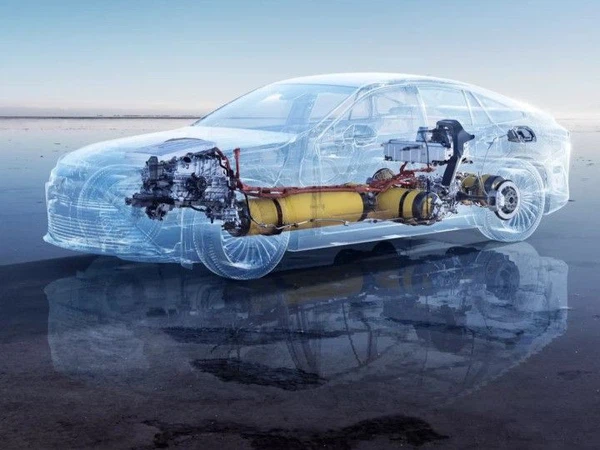
An electric vehicle (BEV) refers to a vehicle powered by an onboard power source and driven by an electric motor, complying with road traffic safety regulations. The main differences between a pure electric vehicle and a fuel-powered vehicle lie in four components: the drive motor, speed controller, power battery, and onboard charger. Instead of traditional gas stations, it relies on public fast-charging stations. The quality of a pure electric vehicle depends on these four components, and its value is also determined by the quality of these components.

The selection and configuration of the four major components directly affect the use of pure electric vehicles. The speed and acceleration of a pure electric vehicle depend on the power and performance of the drive motor, while its driving range depends on the capacity of the onboard power battery. The weight of the power battery depends on the choice of battery type, such as lead-acid, zinc-carbon, or lithium-ion batteries. These batteries differ in volume, specific gravity, power-to-weight ratio, energy density, and cycle life.

The choice of components depends on the manufacturer's positioning and use of the vehicle, market definition, and market segmentation. The drive motor of a pure electric vehicle can be categorized as DC brushed, brushless, permanent magnet, electromagnetic, AC stepper motor, etc. The selection is also related to the overall configuration, purpose, and grade of the vehicle. Furthermore, the speed control of the drive motor can be divided into stepped speed control and stepless speed control, including electronic speed control and continuously variable transmission. There are various types of drive systems, such as hub motors, internal rotor motors, single motor drive, multi-motor drive, and combined motor drive.