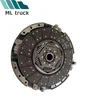
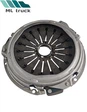
Based on the degree of slippage, adjustments can be made. If the slippage is minor, resolving the slipping issue caused by the incomplete disengagement of the clutch can be achieved by adjusting the pedal's travel. On the other hand, if the slippage is severe, to the point where the rivets are nearly exposed, adjustments cannot be made. In this case, the friction disc must be replaced.

A slipping clutch means that during regular usage, when the clutch pedal is fully released and the transmission system isn't overloaded, the master and slave discs cannot achieve a synchronized response when the clutch is in the engaged state. This implies that there's relative sliding, and the engine's power cannot be fully transmitted.
To determine if a clutch is slipping, you can start the vehicle, pull the handbrake, engage first gear, release the clutch, and then observe whether the vehicle stalls. If the vehicle stalls, it indicates that the clutch is functioning correctly. If the vehicle doesn't stall and continues to run normally, it suggests that the clutch is slipping. If a slipping clutch fault is not addressed promptly, subsequent issues may arise, such as the transmission gears, drive shaft, and differential getting damaged. Over time, this can significantly damage the engine.
Causes of Clutch Slippage:
1:Prolonged coasting with the clutch depressed.
2:Forceful shifting into or out of gears, like trying to engage the first gear when the vehicle's speed exceeds 20km/h.
3:Not pressing the clutch pedal all the way down, improperly engaging gears, or incomplete engagement.
4:Keeping the vehicle in a semi-clutch state for extended periods.