


1:What is it?
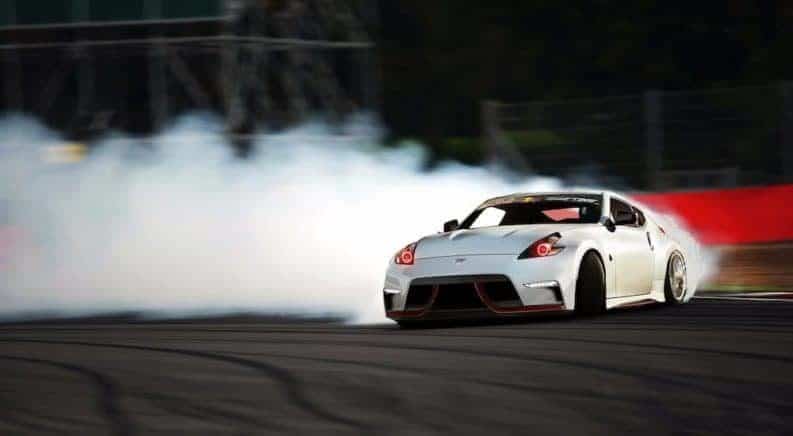
Drifting is a racing term that refers to a series of maneuvers where the front wheels are steered at a significant angle relative to the actual direction of the vehicle's motion, causing the car to slide sideways through a turn.
2:When does it occur?
Drifting occurs when the rear wheels lose most of their traction while the front wheels maintain traction (at least partially or ideally gain additional traction). As long as the front wheels have some lateral force, the vehicle can initiate oversteer and drift.
3:How is it performed?
There are several techniques to initiate drifting:
(1)Pulling the handbrake while driving straight and then steering.
(2)Pulling the handbrake while cornering.
(3)Applying a sudden brake while driving straight and then steering.
(4)Applying a sudden brake while cornering.
(5)Applying a significant amount of throttle while steering, especially in rear-wheel-drive vehicles (or four-wheel-drive vehicles with a rear-biased torque distribution), at moderate speeds.
Techniques 3 and 4, utilizing weight transfer (shifting weight onto the front wheels), are considered to be less damaging to the vehicle. Techniques 1 and 2 are primarily used for front-wheel-drive vehicles and in competitive drifting events, but they should be avoided unless you're willing to risk damaging your car. Note that techniques 1 and 2, and techniques 3 and 4 are distinct as the vehicle's trajectory will differ significantly.
4:Did you know?
Just like regular cornering, drifting also has speed limits, and the maximum speed for drifting is only slightly higher than that for regular cornering. On hard surfaces, the maximum speed for drifting is even lower than for regular cornering.
The ability to initiate and maintain a drift depends on multiple factors, including the friction coefficient between the tires and the road surface, vehicle speed, braking intensity, throttle input, front wheel angle, weight distribution, wheelbase, suspension stiffness, and more. For example, it is easier to initiate drifts on rainy or snowy surfaces but more challenging to avoid drifting in those conditions. Higher speeds increase the likelihood of drifting (hence the importance of safe driving practices). Fast steering inputs also make drifting more likely (instructors often advise against rapid steering inputs). Vehicles with smaller wheelbases, higher centers of gravity, and weaker anti-roll characteristics in the front suspension are more prone to drifting (but also more prone to rollovers!).



