1: Introduction
In 1967, Hans Werner Aufrecht (A) and Erhard Melcher (M) founded the AMG company in Grossaspach, Germany. Today, it is a subsidiary of Mercedes-Benz specializing in professional vehicle customization. The company currently employs 500 people and produces approximately 12,000 cars per year.
2: Background
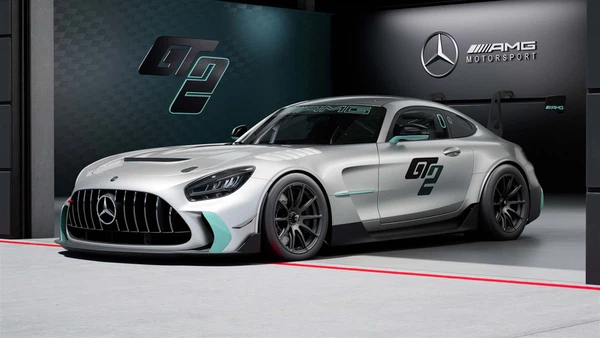
In the 1970s, AMG achieved considerable success by building racing cars and high-performance street cars based on Mercedes-Benz vehicles. However, it wasn't until 1988 that AMG became a significant force in the production of high-performance automobiles. That year, AMG established a strategic partnership with Mercedes-Benz as the company began its return to events such as the German Touring Car Championship. The first car developed through this collaboration was the C36 AMG, introduced in 1993. Mercedes-Benz has since committed to producing AMG models across its vehicle lineup. The emphasis on high performance, particularly through powerful engines, and the unique philosophy of limited production have made M and AMG companies legendary and enduring in the automotive world.
In earlier years, AMG primarily modified Mercedes-Benz 300 SE cars for participation in European touring car races. However, in pursuit of victory, the company underwent a long wait. The breakthrough on the racetrack came in 1971 when an AMG-modified Mercedes-Benz 300 SEL 6.8, driven by Hans Heyer and his teammate Clemes Schickendanz, won the class championship and finished 2nd overall at the renowned 24 Hours of Spa race in Belgium. This success in 1971 proved to be a turning point for AMG's impressive track record.

3: Company Scale
When we mention AMG today, we know it as a leading company specializing in customizing Mercedes-Benz vehicles, and it is now part of the Mercedes-Benz family. However, looking back to the 1960s, AMG was a small workshop that could not be any simpler. Let me share a little story: At that time, a customer traveled from Kiel, Germany, to AMG's city in search of AMG to modify his Mercedes-Benz. After searching around, he was surprised to discover that AMG was relatively unknown. Later, when he asked in front of a small garage, "Where can I find AMG?" the person in the garage told him, "Hey, buddy, you're looking at AMG right now!" The customer couldn't believe his eyes. Even when his Mercedes-Benz was struggling to fit into AMG's garage for modification, he still doubted, "Is this really AMG?" That was in 1968.
Clearly, today the main character of the story has completely transformed, but what remains unchanged is the unwavering pursuit of performance, quality, and safety inherent in the AMG spirit. These AMG business philosophies have been passed down through generations, leading this top-notch customization company to continuously innovate and progress. Since establishing its headquarters in Affalterbach, Germany, in 1978, AMG has gradually expanded its workshop near Stuttgart to a size of 40,000 square meters, with a workforce of 600 people and an annual production capacity of 12,000 vehicles. In 2002, as AMG celebrated its 35th anniversary, a new engine factory, exhibition hall, and two new technical development centers were also completed. The engine factory operates on a single production line, where workers meticulously craft super engines bearing the names of AMG engineers. With a daily output of 100 engines, their value is undoubtedly pronounced. In AMG's exhibition hall, you can see at least eight different super Mercedes-Benz models produced by AMG. Moreover, AMG's exhibition halls not only showcase and sell new vehicles but also host high-level conferences and exhibitions.
4: Milestones
1967:
Hans Werner Aufrecht (A) and Erhard Melcher (M) founded their company in Grossaspach, Germany, and formed the name of the AMG company by taking a letter from each of their names and the name of their city. At that time, the company's brand image was "Design and Testing Engineering Company for Racing Engines."
1971:
Initially, AMG primarily modified Mercedes-Benz 300SE cars to build high-performance racing cars for participation in European touring car races. After years of waiting, their breakthrough came in 1971 when an AMG-modified Mercedes-Benz 300 SEL 6.8, driven by Hans Heyer and Clemens Schickendanz, won the class championship at the renowned 24 Hours of Spa race in Belgium, finishing 2nd overall.
1978:
The size of the small factory in Burgstall, where AMG was located, could no longer meet the growing demands of the company. As a result, more than 40 employees of AMG moved together to Affalterbach, where they established their headquarters.
1988:
AMG established a strategic partnership with Mercedes-Benz, becoming a subsidiary of the company and specializing in high-performance customization for Mercedes-Benz vehicles. This partnership allowed Mercedes-Benz to reenter events like the German Touring Car Championship with the support of AMG. Mercedes-Benz's acquisition of AMG was a double-edged move: it expanded the high-performance vehicle product line for Mercedes-Benz and showcased the company's achievements in German touring car racing using AMG's extensive experience, making it more convenient and prestigious than Mercedes-Benz doing the modifications themselves.
1989:
AMG became one of the most successful teams in the German Touring Car Championship, with Klaus Ludwig and Johnny Cecotto winning a total of 7 championships.
1990:
AMG opened its second factory in the Affalterbach area. The company's workforce reached 400 employees, and AMG signed a contract with Mercedes-Benz to expand their cooperation in motorsports and begin customizing and selling production cars for Mercedes-Benz.
1992:
AMG driver Klaus Ludwig won the German Touring Car Championship title.
1993:
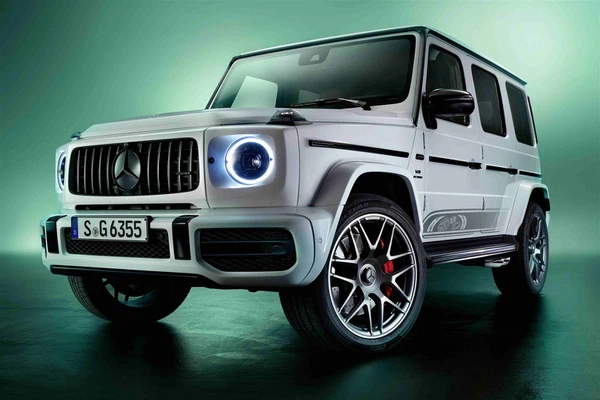
The first product resulting from the collaboration between Mercedes-Benz and AMG was the C36 AMG, introduced in 1993. From that year onwards, nearly all series of Mercedes-Benz cars featured AMG-modified versions. Mercedes-Benz also committed to producing AMG models for each of their vehicles.
1994:
AMG driver Klaus Ludwig won the German Touring Car Championship title for the second time.
1995:
AMG driver Bernd Schneider secured AMG's third victory in the German DTM championship and also won the inaugural International Touring Car Championship (ITC).
1998:
AMG released a limited edition of 25 road-going versions of the AMG CLK-GTR, while AMG-Mercedes won all 10 races in the FIA GT Championship.
2003:
The supercharged V8 engine developed by AMG for Mercedes-Benz received the Engine of the Year award. Bernd Schneider won his third DTM championship title.