A new round of military conflict has erupted between Israel and Palestine, with continuous exchanges of fire and escalating tensions. This sudden and unprecedented conflict appears to be intensifying.
War is primarily a human tragedy but also results in economic and industrial losses. In the global tech industry, Israel stands out as a small yet influential player, particularly in semiconductor technology. It's one of the few nations outside East Asia producing advanced chips, a major source of chip engineering talent, a hotbed for semiconductor startups, and a hub for international chip manufacturers.
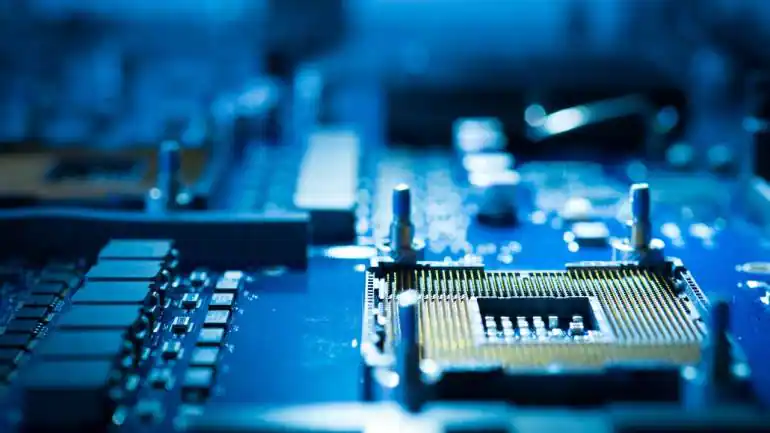
According to data from the Israel Venture Capital Research Center (IVC), as of 2018, Israel had 163 chip companies and 35 R&D centers. By the first half of 2021, 37 multinational firms had established semiconductor branches in Israel. By 2022, there were over 600 semiconductor companies, nearly 200 of which were chip design R&D firms.
Among tech giants with significant operations in Israel, Intel is prominent. Intel's relationship with Israel dates back to 1974 when it established its first overseas base in Haifa. Over the years, Haifa has become a key chip research and design hub for Intel, contributing significantly to its sustained success. Besides Haifa, Intel has R&D centers in Petah Tikva and Jerusalem.
Additionally, Intel has a production base in Kiryat Gat: the Fab 28 factory produces 7nm process chips, and the Fab 38 plant, set to open in 2024, will utilize 5nm processing and EUV lithography. Currently, Intel employs around 12,800 people across Israel, making it the country's largest private-sector employer and exporter, covering areas like AI and autonomous vehicles.
Tower Semiconductor, the world's seventh-largest foundry, operates two factories in Israel, producing over 50,000 wafers monthly, providing analog and mixed-signal semiconductors mainly for the automotive and consumer sectors. Last year, Intel acquired Tower.
Besides Intel, NVIDIA has extensive operations in Israel, primarily in R&D. Israel is NVIDIA's largest R&D center outside the US. NVIDIA has seven offices and 3,300 employees in Israel, accounting for 12% of its global workforce, making it one of the country's largest tech employers.
Qualcomm and Cisco have established R&D centers in Israel; Google is building a chip factory there, while Microsoft plans to expand its chip R&D activities with a local data center. Beyond American giants, Korean semiconductor behemoths are also increasing their investments in Israel and depend significantly on it. Samsung set up operations in Israel in 2016 and has continuously invested and acquired there.
Almost all leading international semiconductor companies have set up camp here.
As Israel enters a state of war, semiconductor firms' standard operations will undoubtedly be affected short-term.
For instance, NVIDIA has canceled its AI conference scheduled for October 15th in Tel Aviv. Intel faces significant uncertainty: its R&D center in Haifa is a mere 40-minute drive from the Lebanon border, and its Kiryat Gat production base is just 30 minutes from the Gaza border. Both locations are currently at the heart of the Israel-Palestine conflict.
Many workers, even senior managers, serve as reservists in the Israel Defense Forces. Israel has indicated it will mobilize an unprecedented 300,000 reservists, many from semiconductor firms. NVIDIA's CEO, Jensen Huang, disclosed in an internal email that nearly 400 of the company's Israel-based employees have been drafted.
Aside from drafted employees, daily commuting is also affected. For example, Israel's blockade of Gaza effectively closed all transit points, hindering workers traveling across the Gaza-Israel border, leading to staff shortages impacting normal operations and production.
The escalated Israel-Palestine conflict, with associated transport disruptions like flight cancellations and maritime blockades, deeply impacts the supply chain. Many airlines have suspended flights to and from Israel, and maritime business faces additional controls from the Israeli Navy, making imports and exports increasingly challenging.
This conflict, which is severe and unlikely to end soon, could again disrupt and damage the global semiconductor supply chain, which is just recovering from pandemic impacts. The extent of influence will become clearer over time, with the conflict's duration, intensity, and potential spillover into other regions becoming critical factors.