1:What is it?
NCAP (New Car Assessment Program) originated in the United States and introduced the five-star rating system in 1978 to evaluate the performance of protecting occupants in frontal crashes. Global NCAP programs include ANCAP (Australia), EuroNCAP (Europe), USNCAP (United States), IIHS (Insurance Institute for Highway Safety), CNCAP (China), JNCAP (Japan), KNCAP (South Korea), LATINNCAP (Latin America), and ASEANNCAP (Southeast Asia). Among all NCAP organizations, EuroNCAP has significant influence. It was established in 1997 and its core members include ADAC (Germany's largest automobile club, highly popular among consumers in Europe with extensive public trust), the UK Department of Transport, the UK FIA Foundation, the German Department of Transport, and others.
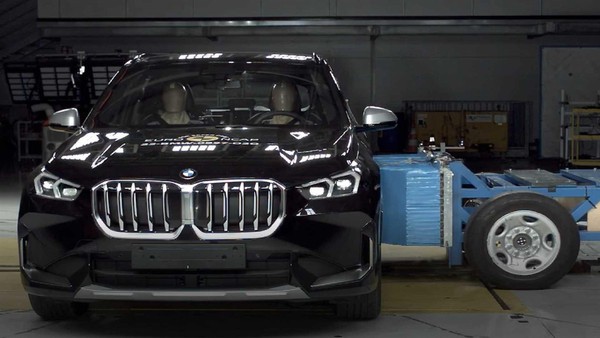
NCAP has played a crucial role in encouraging automakers to improve the passive safety of vehicles. In the late 1990s, during crash tests, very few models achieved a rating of 3 stars or higher, with one or two stars being common. However, today, even in the category of microcars, many vehicles achieve a score of 5 stars or higher.
2:Star Rating Criteria
The testing typically includes two aspects: frontal and side collisions. The frontal collision is conducted at a speed of 64 km/h, and the side collision at 50 km/h. The test results are represented by star ratings (★), ranging from one to five stars, with a higher star rating indicating better crash safety performance for the vehicle.
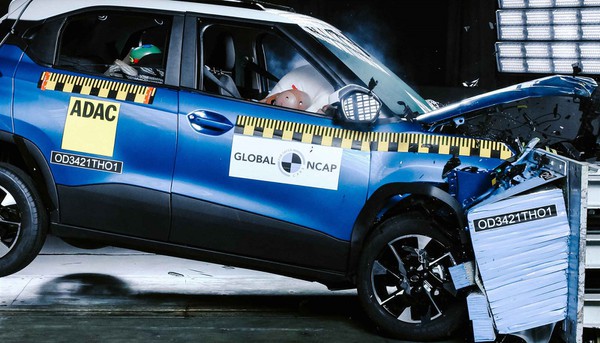
NCAP's star rating encompasses three categories: adult occupant protection, child occupant protection, and pedestrian protection. Generally, a score above 30 points in adult occupant protection qualifies for a 5-star rating, 25-29 points for 4 stars, 20-24 points for 3 stars, and so on. The actual star rating assessment is not solely based on numerical scores. For example, if a vehicle has a lower overall score but the crash test dummies did not sustain fatal injuries, its star rating may be increased. Similarly, if a vehicle has a relatively high score but the dummies sustain fatal injuries, the star rating may be decreased. Additionally, there are controversial bonus points in European NCAP as well, such as the inclusion of a seatbelt reminder function, which generally adds 2 points.
The highest rating for adult occupant protection is 5 stars, and many mainstream executive and family sedans meet this standard. Although some compact and even microcars have achieved a 5-star rating, it is still generally acknowledged that larger vehicles have higher safety levels than smaller ones. Performance cars should ideally have better safety along with their performance capabilities. However, to date, no sports car has achieved a 5-star rating in European NCAP crash tests.
The highest rating for child occupant protection is also 5 stars, but to date, no vehicle has achieved this accolade. Pedestrian protection has a maximum rating of 4 stars, but unfortunately, most vehicles score only 1-2 stars, with 3 stars being rare.