Braking and veering to the left could be due to an issue with the braking distributor pump, which impacts the brake force between the upper and lower wheels. It might also be caused by unequal air pressure between the wheels. Moreover, if there's a malfunction in any of the braking distributor pump, ABS pump, master cylinder, or brake hose, it can result in an uneven brake force distribution between the tires.
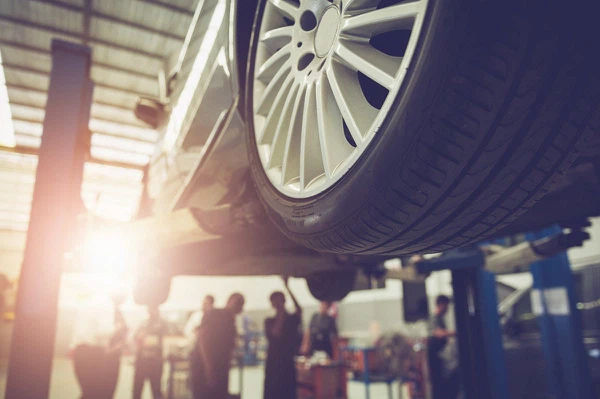
If we exclude issues in the braking system, one should check for any significant discrepancies in tire air pressure. Inspect the wear level of both side tires as well as the difference in wear between the front and rear tires. Differences in tire traction can also lead to brake bias. Additionally, during vehicle maintenance, it's crucial for owners to pay close attention to both tire condition and the braking system to avoid potential safety hazards in the future.
Reasons for Severe Directional Deviation When Braking Hard:
1:Issues with the Brake Disc and Pads: If either the brake disc or the brake pad on one side of the vehicle wears out excessively, or if the surface of either is not smooth, it can cause deviation.
2:Vehicle Wheel Alignment: Errors in the wheel alignment parameters or disturbances in these parameters can cause deviations.
3:Tire Issues: Problems like abnormal tire pressure, differences in tire tread patterns, varying wear levels, and aging between the left and right tires can all lead to a directional deviation when braking.
4:Vehicle Suspension Issues: Deviations can be caused by issues like mismatched suspension heights on either side, worn-out ball joints, aged stabilizer bar bushings, or deformed connecting rods.