1:Profile:
Ayrton Senna da Silva (March 21, 1960 – May 1, 1994) was born in São Paulo, Brazil. He began driving go-karts at the age of 4 and started participating in karting races at the age of 13. At 24, he joined the Formula One Toleman team, kicking off his F1 career. He won the F1 World Championship three times in 1988, 1990, and 1991. Tragically, on May 1, 1994, he died in an accident during the San Marino Grand Prix.

2:Personal History:
Childhood
Senna was born into a wealthy family. His father, Milton, was a successful businessman and a car racing enthusiast. From a young age, Senna tinkered with various car parts in his father's garage. At 4, his father built him a small go-kart. The first time he drove it, he effortlessly maneuvered it around the street, leaving all the adults present astonished by his driving talent.
By 13, Senna officially became a kart racer. In July 1973, he achieved his first victory at the Interlagos track in São Paulo. According to Senna's mechanic TCHE from that period, during training, Senna would typically not time entire laps. Instead, he divided the Interlagos track into four segments, pushing to the limit in each segment. During the actual race, he would combine his knowledge from these segments to achieve the fastest lap.
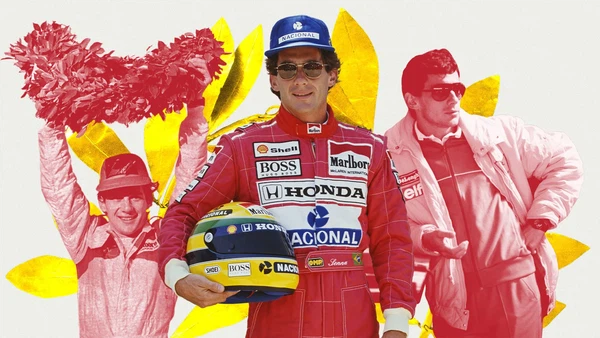
In 1974, Senna won the youth group championship of the São Paulo Karting Race. In 1975, he became the runner-up in the youth group of the Brazilian Karting Race and secured the youth group championship in the Nacinal Italcolomy Circuit Race. In 1976, Senna clinched more top positions, winning the São Paulo Karting Race 100cc B-class and coming third in the Brazilian Grand Prix 100cc B-class, and achieving victory in the São Paulo 3-hour Karting Race 100cc A-class.
In 1980, Senna secured the championship in the South American Karting Championship and the International Group of the Brazilian National Cup. Additionally, he achieved second place in the 135cc category of the World Karting Race held in Nivelles, Belgium. Among the spectators was an 11-year-old boy named Michael Schumacher, who watched Senna intently. Years later, Schumacher reminisced, "It was the first time I saw Ayrton on the track. The way he drove, the lines he chose, it was mesmerizing."

Brief Marriage
Throughout his life, Senna had countless girlfriends and a brief marriage to Lilian da Vasconcelos. He met Lilian, a blonde beauty, in the winter of 1980. Her mother was a friend of Senna's mother, and he decided to pursue Lilian.
"Very few people truly understand me. They don't realize the cost of being a race car driver. I have to leave friends and family, live thousands of miles away in Europe. Being so young and constantly competing is not easy," Senna once remarked. Every morning, Lilian would prepare breakfast, and after Senna ate, he would go out for training. She often baked his favorite chocolate cake and then waited for him to return home. The young couple, living in a foreign land, battled feelings of loneliness. When Senna returned home after training, he would take Lilian in his arms, and the two would often cry together for hours.

"Please, stay away from me. I have a race tomorrow!" was a common phrase from Senna the night before a Ford Formula race. To not disturb his pre-race preparations, he would sleep separately from his wife. He also removed his wedding ring, threading it onto a necklace so it wouldn't interfere with his grip on the steering wheel. Every time he won a race, Senna would envelop Lilian with the victor's wreath, a symbol of gratitude for her unwavering support during those tough times.
However, just before the end of the season, financial difficulties arose in Senna's father's company, causing an interruption in supporting Senna's career. After several unsuccessful attempts to find other sponsors, in October 1981, Senna announced his retirement and returned to Brazil with his wife. For four months, Senna managed his father's construction company, but the burning desire to get back on the race track only grew stronger. At one point, his father gave him a choice: business or racing. Without hesitation, Senna chose the latter. Milton understood that racing was his son's lifelong pursuit and continued to support him, much like when he started karting.

Ayrton Senna
In February of the following year, Senna returned to England but left Lilian in Brazil. A few days later, he called her from England, and they decided to divorce. "Racing was more important to Ayrton than any woman. Racing was his life. That's why he became the greatest driver. All the women were left behind, all of them!" Lilian remarked.

Introduction to F1
In 1982, representing the Van Diemen team, Senna participated in 27 Formula 2000 races. In the British and European Championships, he secured 16 pole positions, set the fastest lap 23 times, and achieved 22 victories. During a race at the Snetterton circuit, even with a malfunctioning brake system, Senna astonishingly finished first. Everyone was amazed at his miraculous driving style, as the monitoring data showed no signs of a brake system malfunction.
This was Senna's final year in karting, finishing first in the Porto Alegre Grand Prix and 14th in the World Championship. In November, he participated in an F3 race for the first time with a wildcard and, after setting the fastest lap, won the competition. The following season, he received an offer for a test drive from the McLaren F1 team but declined.
Before joining F1, Senna decided to prove himself in F3. In the 1983 British F3 Championship, he began using the name Ayrton Senna to be more memorable for the media and fans, as his mother's surname was "Senna". Out of 20 races that season, he started 15 from pole position and won 13, eventually becoming the overall champion. Now, it was time to embark on his F1 journey.

Official Entry into F1
Armando Botelho, a friend of Senna's parents and Senna's agent, handled matters related to sponsors, contracts, and advertisements, and also took care of Senna's life in Europe. On July 19, 1983, Botelho secured a test drive for Senna with the Williams F1 team. That day, Senna sat in an F1 car for the first time, driving the 600 horsepower vehicle for 83 laps at the Donington Park circuit. Astonishingly, in less than ten laps, he matched and then broke the lap record held by Williams' test driver.
However, Williams had no plans to keep Senna and only offered the test drive for him to gain experience. Subsequently, at the Paul Ricard circuit, Senna also test drove for the Brabham team. Even while using old tires, his performance was only one second slower than the then-F1 World Champion Nelson Piquet. But Piquet wasn't interested in having his Brazilian compatriot Senna as a teammate.
Unable to secure a spot in a top team, Senna started his F1 career with the less competitive Toleman team. They agreed on a three-year racing contract, stipulating that if the car wasn't competitive enough, Senna could opt for another team. If Toleman didn't want to release him, Senna had the right to halt participation. In March 1984, with the Toleman team, the future F1 legend began his rookie season.
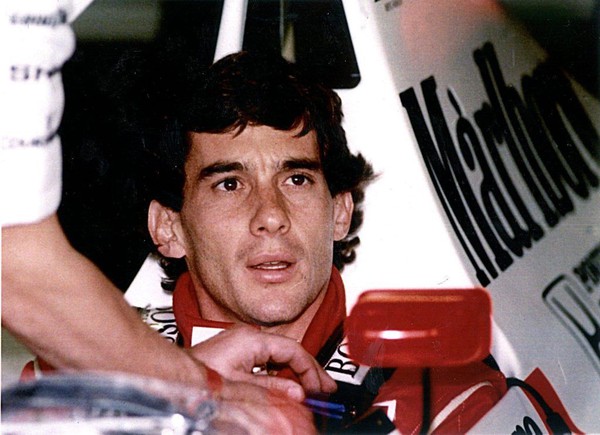
In the new season, Senna received a contract from the Lotus team, a team capable of assisting him in securing race victories. They provided him with all necessary support to match his talent. On April 21, 1985, during the Portuguese Grand Prix, a race held in the rain, Senna skillfully drove his black and gold Lotus car across the finish line first, nearly lapping all other drivers. This was his first F1 race victory and held significant meaning as, on the same day, Brazil's first elected president, Tancredo Neves, passed away due to illness, plunging the entire nation into mourning. Senna's victory served as a beacon of inspiration for the Brazilian people during this somber period.
In his first year with Lotus, Senna secured 7 pole positions and won two races, in Portugal and Belgium. The following year, he achieved 8 pole positions and victories in Spain and the USA. In 1987, his last season with Lotus, Senna finished as the third-best driver of the year. However, his goal was the F1 World Championship, and the mid-tier performance of the Lotus car could not offer enough competitiveness. Thus, Senna switched teams again.

Three Championships with McLaren
In 1988, McLaren recruited Senna, who by then had gained significant fame with Lotus. That season, McLaren won 15 of the 16 races, with Senna achieving 8 individual race victories (Imola, Canada, Detroit, Britain, Netherlands, Hungary, Belgium, and Japan), 13 pole positions, and his first World Championship title.
In the 1990 season, Senna's teammate was replaced by Berger. That year, Senna scored his second driver's title with 78 points. However, at the beginning of the season, Senna was quite disheartened, still grappling with the shadow of his defeat in Japan the previous year. But at the first race in the USA, he received immense support from his home fans, reigniting his competitive spirit and desire for victory. Against rival Alessi of the Tyrrell team, Senna ultimately triumphed.
In 1993, with the Ford engine replacing the Honda, the F1 scene underwent significant changes. Mansell moved to the USA, Prost joined Williams, and Andretti became Senna's teammate (replaced by Häkkinen in the latter half of the season). Due to Ford's full support for the Benetton team, Senna's McLaren car didn't perform well that season. However, he managed to clinch four race victories, three of which were in the rain. One of Senna's most iconic wins was at the European Grand Prix held at Donington Park, England, where he surpassed five cars in the first lap under heavy rain to eventually claim victory.
In 1994, Senna transferred to Williams, signing a two-year contract with an annual salary of 15 million US dollars. He was determined to regain his past glory with Williams.

Tragic Accident
On May 1, 1994, at 14:18 during the 7th lap of the F1 San Marino Grand Prix on the Tamburello bend of the Imola circuit, Senna's FW16, moving at a speed of 300 km/h, suddenly veered off track and crashed violently into a concrete barrier. The iconic yellow-green helmet drooped lifelessly to the side, and blood rapidly filled the narrow cockpit. The impact caused severe head trauma and arterial rupture. Despite emergency transfusions, tracheal intubation, and cardiac massages, these efforts proved to be in vain. As Senna was urgently airlifted to a nearby Bologna hospital, blood continued to gush from his nose, mouth, and ears. Surgery was no longer an option. Two hours later, after slipping into a deep coma, Senna embarked on his final journey. A priest who performed the last rites said that Senna's dark eyes seemed to have never dimmed. He was officially pronounced dead at 18:40 on May 1, 1994.